Community Post
Rock Pool Experience: Discovering the Hidden Wildlife of the Shoreline
Rock pools provide a fascinating glimpse into a world that is normally hidden beneath the sea. When the tide retreats, pockets of seawater remain trapped between rocks, creating temporary habitats containing an extraordinary variety of marine life. Crabs, anemones, small fish, molluscs, seaweed and other organisms can often be observed at surprisingly close range.
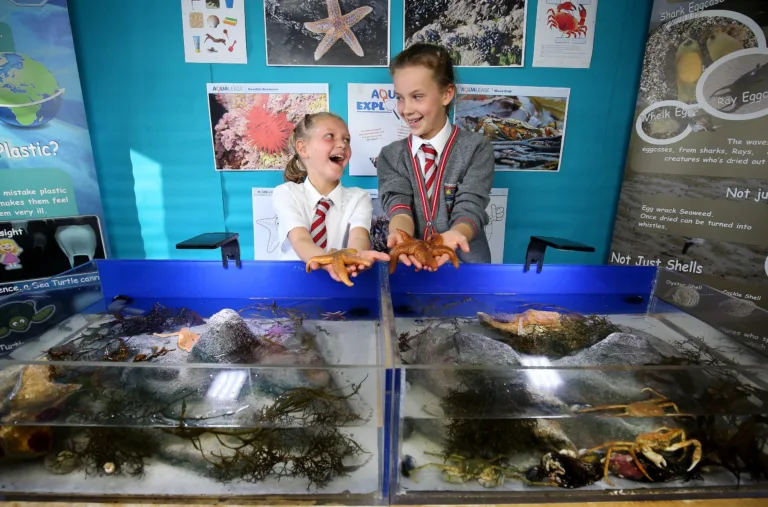
A rock pool experience provides an opportunity for children and adults to explore these habitats and learn more about the animals and plants that live around the coastline. Whether taking place on a natural shore or through a supervised educational marine exhibit, the experience can combine close observation with learning about habitats, tides, adaptation and marine conservation.
Rock pools are particularly interesting because they are challenging environments in which to live. Animals may spend part of the day submerged beneath seawater before becoming isolated as the tide falls. Conditions within individual pools can then change considerably until the sea returns.
Temperature can rise when pools are exposed to sunlight, while rainfall can alter salinity. Waves, predators and changing oxygen levels create further challenges. The species found within this environment have therefore developed behaviours and physical characteristics that help them survive these changing conditions.
For younger visitors, simply finding an animal can be exciting. A seemingly empty pool may reveal small crabs hiding beneath rocks, snails attached to surfaces or anemones that initially resemble brightly coloured plants. Looking carefully encourages observation and demonstrates that wildlife is not always immediately obvious.
Older children and adults can begin examining why particular animals live where they do. Some species remain firmly attached to rocks, while others shelter in crevices or beneath seaweed. Understanding these behaviours introduces broader ideas about adaptation and survival.
What Can You Discover in a Rock Pool?
The wildlife present will vary according to location, season, tidal conditions and the characteristics of the shore. Even two pools positioned only a short distance apart can contain noticeably different communities.
Crabs are among the animals most commonly associated with rock pooling. Small shore crabs can hide remarkably effectively beneath rocks and vegetation, while hermit crabs use empty shells to protect their softer bodies.
Sea anemones are another fascinating discovery. Although their appearance can resemble a flower, anemones are animals. When submerged, their tentacles extend into the surrounding water, while individuals exposed by the falling tide can appear very different.
Small fish may become temporarily trapped within larger pools as the tide retreats. Their colouration and behaviour can make them difficult to spot against rocks, sand and seaweed.
Molluscs provide further opportunities for exploration. Limpets attach themselves strongly to rocky surfaces, while periwinkles and other marine snails can often be found moving slowly across rocks and vegetation.
Seaweed itself is an important part of the habitat rather than simply background vegetation. Different varieties provide shelter and food while helping create cooler, protected areas where small animals can hide.
A guided rock pool experience can help visitors identify these different organisms and understand the relationships between them. Rather than simply finding an animal and moving on, participants can learn why it lives in a particular part of the shore and how it copes with changing conditions.
Tides provide another important educational subject. Rock pools demonstrate clearly that the coastline is not a fixed environment. Areas covered by several metres of seawater at high tide may be completely exposed only hours later.
This introduces the concept of the intertidal zone: the area of coastline situated between typical high- and low-tide levels. Different organisms can be found at different heights within this zone depending on how well they tolerate exposure to air and changing environmental conditions.
Exploring Rock Pools Responsibly
Finding marine wildlife should always be balanced with protecting it. Rock pools may look robust, but the animals living within them can be surprisingly vulnerable to disturbance.
One of the simplest principles is to observe animals where they are whenever possible. Picking up every creature is unnecessary, and some species are better left completely undisturbed.
Where supervised handling is appropriate, animals should be treated carefully and returned promptly to the location where they were found. Marine organisms should not be kept out of water for unnecessarily long periods simply for photographs or closer examination.
Turning rocks can reveal animals hiding underneath, but rocks should be returned carefully to their original position. Leaving them overturned can remove the cool, damp shelter relied upon by the animals living beneath them.
Containers can sometimes be useful for short periods of supervised observation, but animals should not be crowded together or left exposed to excessive heat. Water within a small container can warm surprisingly quickly in direct sunlight.
Visitors should also avoid removing living animals from the shore. Empty shells may look attractive, but even apparently abandoned shells can become useful homes for animals such as hermit crabs.
Safety is equally important. Coastal rocks can become extremely slippery, particularly where seaweed is present. Suitable footwear and close supervision of children are sensible precautions.
Tide times need particular attention on natural shorelines. Exploring as the tide falls can provide more time for observation, while an incoming tide can potentially cut people off from safe routes back along the shore. Local conditions should always be understood before exploring unfamiliar coastal areas.
Rock pooling also provides an opportunity to discuss marine pollution. Plastic fragments, discarded fishing materials and other litter can become trapped between rocks. Seeing pollution within a wildlife habitat can make the environmental consequences much more tangible than simply discussing the issue theoretically.
Visitors can learn why rubbish should be removed responsibly while also understanding that potentially hazardous objects should not be handled without appropriate supervision.
A rock pool can also demonstrate the importance of biodiversity. What initially appears to be a small pool of seawater may support numerous species occupying different ecological niches.
Predators, grazers, scavengers and filter feeders can all form part of the same small community. Learning about these relationships helps explain how ecosystems depend on interactions between many different organisms.
This makes rock pooling particularly valuable for educational groups. Schools can connect the experience with subjects including habitats, food chains, adaptation, classification, environmental change and conservation.
Families can approach the activity more informally. Identifying species, photographing discoveries and keeping a record of what has been observed can turn a visit into an enjoyable introduction to marine biology.
Indoor or managed marine environments can provide another way to experience rock-pool wildlife. Carefully designed exhibits can allow visitors to observe species closely while learning about their natural habitats, particularly where access to a suitable coastline is difficult.
Supervised encounters can also provide opportunities to explain appropriate animal handling and answer questions about species that visitors may otherwise overlook in the wild.
Whatever the setting, curiosity should remain at the centre of the experience. Looking carefully into a rock pool demonstrates how much wildlife can exist within an apparently small and simple habitat.
Ultimately, a rock pool experience provides much more than an opportunity to find crabs and small fish. It can introduce people to tides, marine habitats, animal adaptation, biodiversity and conservation through direct observation. By exploring carefully and treating wildlife responsibly, children and adults can discover one of the coastline's most accessible and fascinating natural ecosystems.