Community Post
Solid State Relays: Efficient Electronic Switching for Modern Control Systems
Electrical control systems frequently need a reliable method of switching loads in response to relatively small control signals. Traditional electromechanical relays have performed this function for decades, but applications involving frequent switching, demanding operating cycles or the need for silent operation can benefit from an alternative approach.
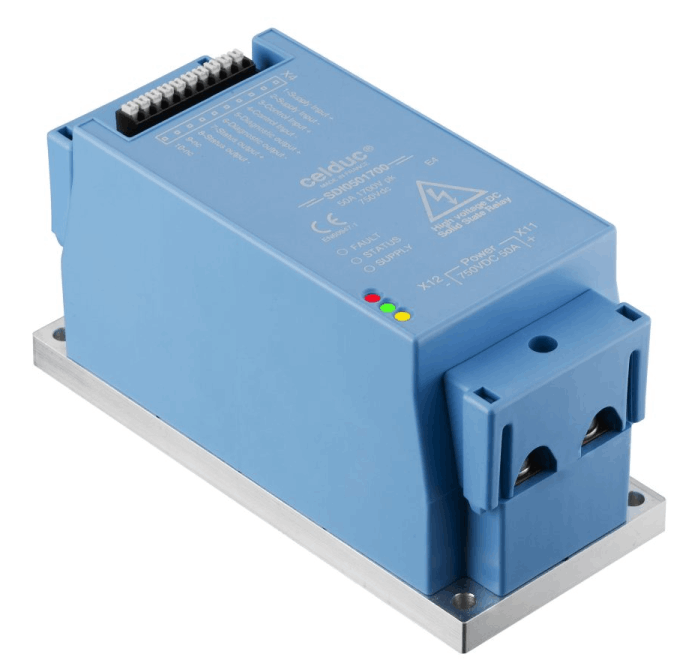
Solid State Relays use semiconductor technology to switch electrical loads without relying on the moving contacts found inside conventional electromechanical relays. A low-power input signal controls an electronic switching device on the output side, allowing equipment such as heaters, motors, lighting and industrial machinery to be controlled while maintaining electrical isolation between different parts of the circuit where the relay design provides it.
The absence of moving contacts is one of the fundamental differences. In a mechanical relay, an electromagnetic coil physically moves contacts between open and closed positions. Every switching operation therefore involves mechanical movement and contact surfaces that can eventually wear.
A solid state device performs the switching electronically. Depending on the application, semiconductor components such as thyristors, triacs or transistors may be used to control the output.
This can make solid state technology particularly attractive where equipment needs to switch repeatedly. Industrial heating systems provide a good example. Maintaining a controlled temperature may require a heating element to be switched on and off frequently in response to a temperature controller. Removing mechanical contact movement can be advantageous in these high-cycle applications.
Silent operation provides another benefit. Mechanical relays typically produce an audible click as their contacts operate, whereas electronic switching can occur without this mechanical noise. This may be useful in laboratories, offices, medical equipment and other environments where noise is undesirable.
How Solid State Switching Works
Although different relay designs use different internal components, the basic principle involves separating a control input from a switched output.
A controller, sensor circuit or programmable logic controller can provide the input signal. The internal electronics then activate the output semiconductor, allowing current to flow through the load circuit.
Optical isolation is commonly used in relay designs to separate the control and load sides electrically. This can help protect lower-voltage control electronics from the higher voltages present within the switched circuit.
The type of output needs to be matched carefully to the application.
AC and DC switching are not interchangeable in every relay. A device designed specifically for an AC load may operate differently from one intended to control DC equipment, so the electrical characteristics of both the supply and load need to be established before selection.
Some AC Solid State Relays incorporate zero-cross switching. Instead of turning the load on at an arbitrary point in the AC waveform, the relay switches close to the point where the waveform crosses zero voltage.
This can help reduce electrical disturbances in suitable resistive-load applications and is commonly associated with applications such as electric heating.
Random turn-on devices provide a different switching characteristic and may be preferable where precise control over the switching point is required. The correct approach therefore depends on the load and control strategy.
DC solid state switching typically relies on transistor-based devices rather than the components commonly used for AC switching. Again, the relay should be selected specifically for the intended circuit.
Input requirements also need consideration. The control voltage provided by the PLC, temperature controller or other device must fall within the relay's specified input range.
Heat, Loads and Correct Relay Selection
One of the most important differences between mechanical and solid state switching concerns heat generation.
A mechanical relay has relatively low resistance across closed contacts. Semiconductor switching devices, however, typically develop a voltage drop while conducting current.
This produces heat.
As the load current increases, thermal management becomes increasingly important. Higher-current installations may require the relay to be mounted onto a suitable heatsink to transfer heat away from the semiconductor.
Simply selecting a relay with a current rating greater than the expected load does not automatically guarantee reliable operation.
Manufacturers may provide derating information showing how allowable current changes with ambient temperature and cooling conditions. Enclosure temperature, ventilation and heatsink performance should therefore form part of the design calculation.
Mounting surfaces also matter. Where a heatsink is required, correct installation helps provide an effective thermal path between the relay and cooling surface.
Overheating can reduce reliability and potentially lead to semiconductor failure, making thermal design a fundamental part of specifying solid state switching.
The characteristics of the load are equally important.
Resistive heating elements are generally relatively straightforward loads, while motors, transformers, solenoids and capacitive equipment can introduce high starting currents or other electrical stresses.
A motor, for example, may draw substantially more current during startup than during normal operation.
Selecting a relay purely according to the equipment's steady-state current could therefore result in an inadequately rated device.
Appropriate protection should also be considered. Semiconductor devices can react differently to overcurrent conditions than mechanical contacts, and suitable fuses or other protective devices may be required according to the relay manufacturer's specifications and the circuit design.
Leakage current is another characteristic that distinguishes many solid state devices from mechanical relays.
When an electromechanical relay is open, its contacts provide a physical separation. A solid state output can allow a small leakage current even when nominally switched off.
In most correctly designed applications this can be accommodated, but it needs to be understood, particularly when working with very small loads or during electrical testing.
Solid state outputs can also fail differently from mechanical contacts. Semiconductor failures may result in a conductive state, so equipment designers should not automatically assume that a failed relay will leave the circuit safely open.
Where a switched function is safety-critical, the complete system should incorporate an appropriate safety architecture rather than relying on the normal operating characteristics of a single relay.
Electrical isolation, protective devices, emergency switching and redundant control may all be relevant depending on the machinery and associated risk assessment.
Industrial automation is one area where solid state technology can be particularly useful. Programmable controllers can operate relay inputs directly in suitable systems, allowing higher-power loads to be controlled from low-power outputs.
Temperature control is another common application because switching frequency can be relatively high. Industrial ovens, process heaters, moulding machinery and environmental control equipment may all require repeated switching over extended periods.
Lighting systems and specialist equipment can provide further applications, although load characteristics should always be considered before choosing the relay technology.
Solid state devices are not automatically preferable to electromechanical relays in every situation.
Mechanical relays can provide extremely low off-state leakage and straightforward physical contact isolation. They can also be economical and perfectly suitable for circuits operating relatively infrequently.
Solid state technology becomes particularly attractive when switching frequency, mechanical wear, noise or operating speed are important considerations.
Maintenance requirements differ too.
Because there are no moving contacts to inspect or replace, there is less mechanical wear within the switching mechanism. However, this does not eliminate the need for inspection of the wider installation.
Electrical connections should remain secure, heatsinks should be kept capable of dissipating heat effectively and ventilation paths should not become excessively contaminated.
Unusual temperature increases can indicate developing problems within the relay, connections, load or cooling arrangement.
Correct replacement specification is also important. Two devices may have similar physical dimensions while differing in control voltage, output type, switching method or current capability.
Engineers should therefore check the complete electrical specification rather than selecting a replacement solely because it fits the same mounting position.
When correctly specified, installed and protected, Solid State Relays provide an effective solution for applications requiring frequent and dependable electronic switching. Their lack of moving contacts can provide long operating life and silent switching, while fast electronic control makes them particularly useful within automation and temperature-control systems. Careful attention to load characteristics, thermal management, protection and switching type is essential to achieving reliable performance.