Community Post
Tree Plant Pots for Gardens, Patios and Outdoor Spaces
Trees can bring height, structure and natural interest to outdoor spaces of all sizes. They can be used to frame entrances, create privacy, soften patios, add greenery to courtyards or provide a strong focal point in a garden design. Where planting directly into the ground is not possible, containers offer a practical and flexible alternative.
Tree plant pots are designed to support larger plants that need more root space, stability and moisture than smaller flowers or bedding plants. They can be used for ornamental trees, evergreen shrubs, fruit trees, bay trees, olive trees, acers and other compact varieties. Choosing the right pot is important because the container directly affects how well the tree grows and how easy it is to maintain.
Size is one of the most important considerations. A pot that is too small can restrict root growth, dry out quickly and make the tree unstable. A larger pot gives the roots more room to develop and provides more compost to hold water and nutrients. For long-term planting, it is usually better to choose a generous container rather than one that only fits the tree’s current size.
Depth is also important. Trees need enough space below the surface for their roots to anchor and support the plant. Shallow pots may look decorative, but they may not provide the structure needed for a tree to grow successfully. A deeper pot can help improve stability, especially for taller plants or exposed outdoor locations.
Material choice affects both appearance and performance. Terracotta pots have a traditional look but can be heavy and may need protection from frost. Plastic and resin pots are lighter and easier to move, making them useful for patios and balconies. Fibreglass, composite and fibreclay pots can offer a modern finish while keeping weight more manageable. Stone and concrete pots are very stable but can be difficult to reposition once filled.
Drainage is essential for healthy container-grown trees. Without proper drainage holes, water can collect at the base of the pot and damage the roots. Good drainage allows excess water to escape while still keeping enough moisture in the compost. Raising the pot slightly off the ground can also help water flow away more easily.
The right compost can make a big difference. Trees grown in containers depend entirely on the growing medium inside the pot. A soil-based compost is often suitable for larger plants because it provides weight, structure and long-term support. Regular feeding may also be needed, as nutrients in pots can become depleted over time.
Watering should be planned carefully. Trees in the ground can draw moisture from surrounding soil, but trees in pots rely on the water available inside the container. During warm weather, windy conditions or long dry spells, regular watering may be needed. Larger pots usually hold moisture better than smaller ones, but they should still be checked often.
Choosing the right tree is just as important as choosing the right pot. Compact, slow-growing or dwarf varieties are often better suited to containers than large, fast-growing trees. Popular choices may include acers, olive trees, bay trees, dwarf fruit trees, conifers and some ornamental evergreens. The tree should suit the available space, sunlight and level of maintenance required.
Tree pots can also help create privacy. Tall evergreens, bamboo-style planting, pleached trees or compact shrubs can be used to screen seating areas, boundaries or overlooked patios. This is useful where permanent fencing or ground planting is not suitable. It also allows screening to be moved or adjusted if the layout changes.
For entrances and driveways, matching pots can create a formal and balanced appearance. A pair of neatly planted containers beside a doorway can make a property feel more welcoming. In commercial settings, large tree pots can improve outdoor seating areas, office entrances, retail fronts and hospitality spaces.
Weight should be considered before planting. Once a pot is filled with compost, water and a tree, it can become very heavy. It is best to place the pot in its final position before filling it. For balconies, decking and roof terraces, load-bearing limits should be checked before using very large or heavy containers.
Maintenance will depend on the tree and pot size. Container-grown trees may need pruning, feeding, watering and occasional repotting. Over time, roots can fill the pot and reduce access to nutrients and moisture. Refreshing the top layer of compost or moving the tree into a larger container can help maintain healthy growth.
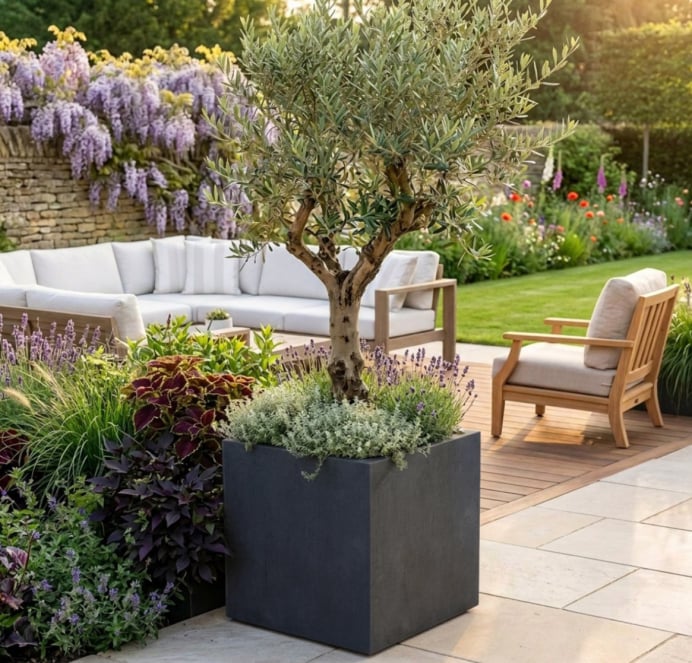
Style also matters. The pot should suit the tree, the property and the wider garden design. Sleek square pots can work well in modern spaces, while round terracotta-style pots may suit traditional gardens. Neutral colours are versatile, while bold finishes can create a stronger design statement.
In summary, tree plant pots are a practical way to grow trees in gardens, patios, entrances and commercial outdoor spaces where ground planting may not be possible. The best results come from choosing the right size, depth, material, drainage and tree variety. With proper care and positioning, tree pots can create attractive, long-lasting features.